Two three-bedroom ranches hit the market in Harrison Township the same week this spring. Same square footage. Same finishes. Same five-minute drive to I-94. One lists at $499,900. One lists at $1,550,000.
What's the difference? It isn't the kitchen. It isn't the school district. It's whether a boat can get from the dock to open water without passing under anything.
The Number On Every Portal Isn't Wrong, It's Just Not About You
If you search Harrison Township on a home value tool, you'll land somewhere around $264,522 as of June 30, 2026, a figure that's actually down 3.3 percent over the past year. Look at a different site and you'll see a median sold price of $369,950 for July 2026, with homes taking about 105 days to sell.
Neither number is inaccurate. Both are also close to useless if you're the buyer who wants a dock.
That township-wide figure blends inland ranch homes, landlocked condos a few miles from the water, and multimillion-dollar canal estates into a single line. It tells you what a typical transaction in Harrison Township looks like. It does not tell you what a waterfront transaction looks like, because those are two different housing products wearing the same zip code.
Waterfront Is Its Own Market, and the First Half of 2026 Shows It
Pull the waterfront closings out from the rest of the housing stock and the picture changes completely.
| Segment | Time window | What the data shows |
|---|---|---|
| Township-wide, all housing | July 2026 | Median sold price $369,950, average 105 days on market |
| Township-wide, home value index | June 30, 2026 | Average value $264,522, down 3.3% year over year |
| Waterfront closings only | Q1-Q2 2026 | 6 sales, average close price $1,121,000, median $397 per square foot |
| Waterfront active inventory | mid-2026 | 31 active listings against just 11 closings in the same six months |
Six sales isn't a large sample, which is exactly why a single high-dollar closing can swing an average and why the median matters more here than the headline number. Even accounting for that, a $1,037,500 median across those closings puts waterfront buyers in an entirely different price conversation than anything a city-wide search will surface.
The inventory gap is the more useful number for anyone actually shopping right now. Thirty-one active waterfront listings against eleven closings over six months means supply is sitting well ahead of demand relative to other communities on this stretch of Lake St. Clair. That's not a sign the market is weak. It's a sign that buyers here currently have room to compare properties side by side rather than racing to beat a competing offer.
The Real Split Isn't Canal vs. Lake, It's Bridge vs. No Bridge
Across Lake St. Clair generally, a direct lakefront home tends to trade at somewhere between two and four times the price of a comparable canal-front property. That gap exists because canal access on most of the lake comes with a catch: a low bridge, a narrow cut, or a shallow stretch that limits boat size and adds real time to reach open water.
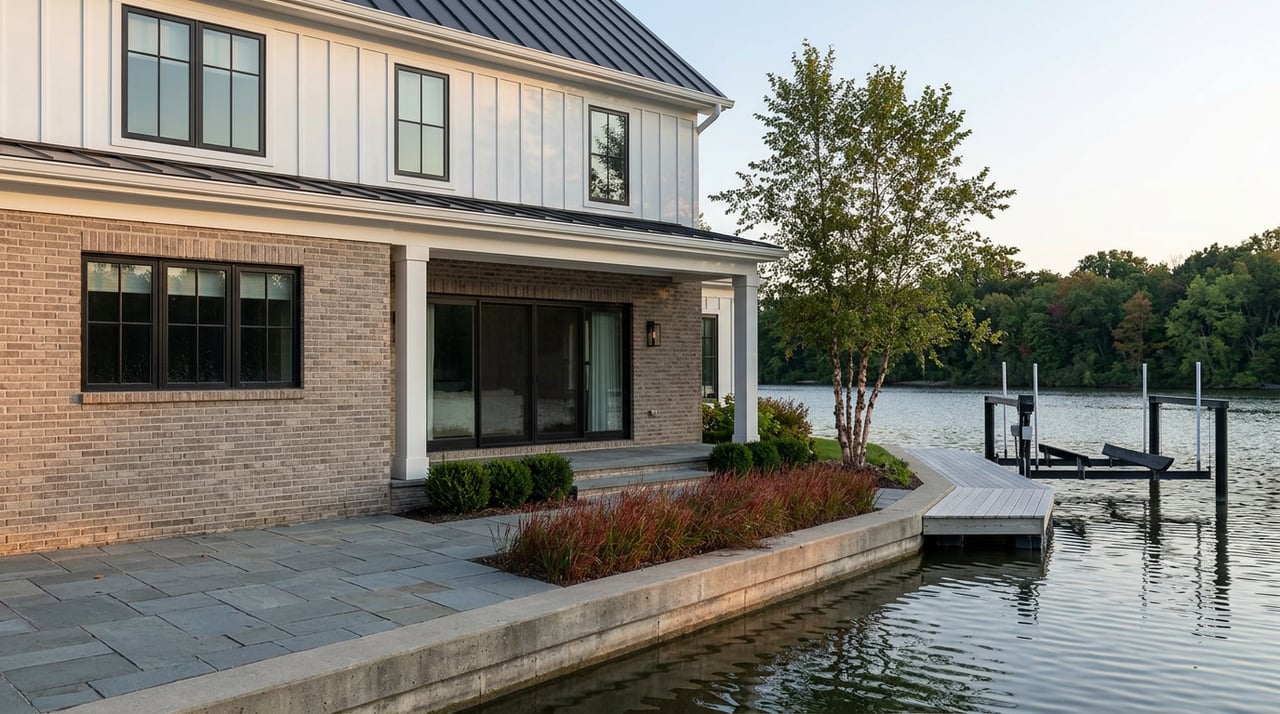
Harrison Township is the exception that makes this worth understanding. Most of its canals are wide and deep with unobstructed access straight out to the lake, no low bridges, no restrictions on hull size. A thirty-foot boat can leave a backyard dock here and be in open water in under five minutes. That single fact does most of the pricing work on the canal-front side of this market.
It's why some of the township's canal streets, particularly the ones a turn or two from open water, function almost like private lakefront for anyone who actually boats. A buyer chasing that lifestyle doesn't necessarily need Huron Pointe Drive or Lakeshore Drive, where the township's direct lakefront estates run $1.5 million to $4 million and up. They may get most of what they're after on a deep-water canal lot at a fraction of the price, provided that canal has no bridge standing between the dock and the lake.
That's the variable worth reading for in a listing description before anything else: not "canal" or "direct," but how many turns and whether there's a bridge in between.
What a Dock Actually Adds, and What the Seawall Ordinance Has to Do With It
Infrastructure has a real dollar value on this market, and it's a bounded one. A permitted dock with a working boat lift and shore power tends to add somewhere between $15,000 and $50,000 at resale, with condition and the size boat it can actually accommodate determining where in that range a given property lands.
The seawall behind that dock matters too, and it's governed by more than taste. Harrison Township's ordinance on waterfront construction, laid out in Chapter 94, Article III of the township code, sets minimum standards for material and stability, including a requirement that roughly 40 percent of the sheet piling sit below grade to hold the wall on line. An older wall that predates current standards, or one that was built to a lower spec, isn't just a cosmetic concern. It can turn into a repair-cost negotiation the moment an inspector or an appraiser flags it, which is a detail worth raising before an offer goes in rather than after.
Reading a Listing Like Someone Who Knows the Difference
Before comparing two waterfront listings on price alone, it's worth checking a few specifics that the price alone won't tell you:
- Is it canal or direct frontage, and if canal, how many turns and how many bridges stand between the dock and open water?
- What's the actual usable dock frontage, and does it match the footage in the listing?
- Is the existing dock and hoist system permitted, and is it rated for the boat you'd actually keep there?
- What material is the seawall, how old is it, and has it been reinforced with tiebacks?
- Which direction does the waterline face? South and west-facing waterfront lots pick up more sun and sunset exposure, and that orientation has tended to sell faster and for more in this market.
Where The Leverage Actually Sits
None of this means every part of the Harrison Township waterfront market favors buyers equally. Well-priced waterfront homes here still average 30 to 45 days on market, and the premium stretch along Huron Pointe Drive continues to draw multiple offers during spring and summer. The leverage described above isn't spread evenly across the whole market. It's concentrated in the middle tier, on solid canal-front product without bridge restrictions, where 31 active listings are competing for attention against a much smaller pool of actual closings.
Does a lower price always mean less access to the lake? Not inside Harrison Township specifically. A canal home a turn or two from open water, with no bridge in the way, can put a boat on Lake St. Clair in under five minutes for a fraction of what a direct lakefront address commands.
How much does a dock realistically add at resale? Local closings point to a range of $15,000 to $50,000 for a permitted dock with a working lift and shore power, with the property's condition and the size of boat it can handle setting where in that range it falls.
If you're weighing a canal-front listing against a direct lakefront one in Harrison Township, or trying to figure out what your own waterfront property is worth once bridge access, dock condition, and seawall age are actually factored in, The Zibkowski Team can walk through the comparison street by street. Get a Free Home Valuation.